Pressotherapy
A pressotherapy machine works by pneumatic compression: a pump inflates and deflates chambers inside a garment — boots, arm sleeves or an abdominal belt — following a programmed sequence. It is used in beauty, wellness and sports recovery settings.
It is not an electrotherapy device: there is no current involved. This category covers professional units for clinics and salons and home-use models, and sits within the wider range of professional beauty equipment.
What defines a pressotherapy unit
Three figures on the data sheet describe what a machine can do, and they matter more than the marketing description.
| Specification | What it determines |
|---|---|
| Number of outlets | How many garments connect at once, and how many chambers each can have |
| Number of compression modes | Which inflation sequences are available |
| Pressure range, in mmHg | The working range the unit can deliver and adjust |
| Session timer | Whether duration is set on the unit or timed manually |
| Emergency stop | Whether the client can release the sequence independently |
The emergency stop deserves attention on a machine used in a salon: it is the control that lets the client interrupt the sequence without the practitioner being in the room, and not every unit has one within reach of the treatment position.
Sequential and simultaneous inflation
The compression modes describe how the chambers fill, and this is where units differ most in practice.
In sequential mode, the chambers inflate one after another from the far end of the garment towards the body, holding each before the next begins. In simultaneous mode, several chambers inflate together. Many units offer both, plus intermediate patterns.
What determines how fine the sequence can be is the number of chambers in the garment, not the number of modes on the machine: a four-chamber boot cannot reproduce the gradation of an eight-chamber one regardless of the programme selected.
The garment has to match the machine
This is the check that most often causes a return, and it works in two directions.
The number of chambers in the garment must correspond to the outlets on the unit. An eight-chamber boot connected to a four-outlet machine will not operate as intended, and connectors are not standardised between manufacturers. The verification starts from the reference of the machine, not from the format of the garment.
And the garment is sized. Boots, sleeves and belts are supplied in defined lengths and circumferences, and the adjustment range is limited: they do not fit indefinitely. On home-use models in particular, taking the measurement before ordering avoids a garment that cannot be closed or one that leaves a gap.
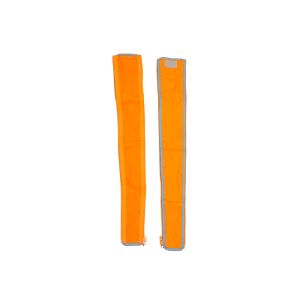
Boots, arm sleeves and abdominal belts are in pressotherapy accessories.
The garment is the consumable
The unit itself has little to wear out; the garment does not.
The seams and the internal chamber welds take the load of every inflation cycle, and the connectors are handled at the start and end of each session. Over time a garment loses pressure at a weld or at a connector, and the symptom is uneven inflation rather than a visible leak.
Before standardising a clinic on a machine, it is worth confirming that garments exist as separate references and are stocked for the medium term: a unit whose boots can no longer be sourced becomes unusable while the pump is intact.
Hygiene between clients
The garment is in direct contact with skin and cannot be autoclaved, which makes it different from most equipment in a cabin.
Two approaches are used in practice: wiping the outer surface between clients with a product the manufacturer states as compatible, and using a disposable liner or single-use suit underneath. The second is common where treatments run back to back, because it removes the wait for the surface to dry.
Cleaning products with an alcohol base degrade lower-grade coatings, and the first place it shows is at the seams and around the connectors. The manufacturer's documentation states what can be used.
Professional and home-use units
The distinction reads from the specification rather than from the description.
A professional unit is dimensioned for successive clients: more outlets, a wider pressure range, programme memory and a build intended for continuous operation. A home-use model is dimensioned for one person, with simpler controls, remote operation and a compact format.
On home-use models the two points to confirm are the garment size, because there is no second set to swap to, and the plug type: professional beauty equipment is largely manufactured in continental Europe, so a unit may be supplied with a European Schuko plug rather than a UK three-pin BS 1363.
Where pressotherapy sits alongside other equipment
Pressotherapy is frequently part of a wider treatment menu rather than a standalone service, and is combined with equipment that works through different physical mechanisms.
Cavitation ultrasound and radiofrequency are the units most often found in the same room, alongside IPL and laser hair removal machines where the centre also offers hair removal. Which technologies are combined, in what order and for which client is determined by the practitioner in line with their training.
What to check before buying
Six points from the data sheet decide whether the unit fits:
- Number of outlets, matched to the chambers in the garments you intend to use
- Compression modes available, and whether sequential and simultaneous are both included
- Pressure range in mmHg and how finely it adjusts
- Garment sizing, measured before ordering rather than after
- Availability of garments as separate references, which determines the service life
- Plug type and whether an adaptor or a fitted UK plug is needed
Pressotherapy equipment is intended for use by trained operators, and home-use models according to the manufacturer's instructions. Session duration, pressure settings, frequency and client suitability are determined by the practitioner or, for personal use, in line with the guidance of a healthcare professional and the manufacturer's documentation.
Frequently asked questions
What is a pressotherapy machine?
A device that works by pneumatic compression: a pump inflates and deflates chambers inside a garment — boots, arm sleeves or an abdominal belt — following a programmed sequence. There is no current involved, which distinguishes it from electrotherapy equipment. It is used in beauty, wellness and sports recovery settings.
Is pressotherapy a weight loss treatment?
No. It is a compression device and does not replace diet, exercise or medical guidance on weight. Any claims about outcomes are for the practitioner to make in the context of a treatment plan, and this page describes the equipment rather than the results of any protocol.
How many outlets does a pressotherapy machine need?
As many as the chambers in the garments you intend to use. The number of chambers in the boot, sleeve or belt must correspond to the outlets on the unit, and connectors are not standardised between manufacturers, so the verification starts from the reference of the machine rather than from the format of the garment.
What is the difference between sequential and simultaneous compression?
In sequential mode the chambers inflate one after another from the far end of the garment towards the body, holding each before the next begins. In simultaneous mode several chambers inflate together. Many units offer both. How fine the sequence can be is determined by the number of chambers in the garment rather than by the number of modes on the machine.
How do I choose the right garment size?
By measuring before ordering. Boots, sleeves and belts are supplied in defined lengths and circumferences and the adjustment range is limited, so they do not fit indefinitely. On home-use models this matters more, because there is no second set to swap to if the first does not close or leaves a gap.
How is the garment cleaned between clients?
The garment is in direct contact with skin and cannot be autoclaved. Two approaches are used: wiping the outer surface with a product the manufacturer states as compatible, and using a disposable liner or single-use suit underneath, which is common where treatments run back to back because it removes the wait for the surface to dry. Products with an alcohol base degrade lower-grade coatings, showing first at the seams and connectors.
Which part of a pressotherapy system wears out?
The garment. The seams and internal chamber welds take the load of every inflation cycle, and the connectors are handled at the start and end of each session. Over time a garment loses pressure at a weld or a connector, and the symptom is uneven inflation rather than a visible leak. It is worth confirming that garments exist as separate references before standardising a clinic on a machine.
What is the difference between a professional and a home-use unit?
A professional unit is dimensioned for successive clients: more outlets, a wider pressure range, programme memory and a build intended for continuous operation. A home-use model is dimensioned for one person, with simpler controls, remote operation and a compact format. On home-use models the garment size and the plug type are the two points to confirm before ordering.