Beauty Equipment
Professional beauty equipment covers the machines and furniture that make a treatment menu possible. What a clinic needs depends on which treatments it offers, so this section is organised by what each machine does rather than by manufacturer.
Five families cover the range: hair removal, body contouring, facial treatment, circulation and drainage, and the manicure and pedicure station.
Hair removal machines
Light-based hair removal is the highest-demand treatment in most salons and the equipment that most often anchors the treatment menu.
The technologies differ in how they deliver the energy: diode laser emits a single wavelength, IPL emits a broad spectrum shaped by filters, and SHR works through repeated low-energy passes. Each suits a different combination of skin and hair type, and the choice affects both session length and consumable cost. The full range, along with lamps, filters, handpieces and protective eyewear, is in IPL and laser hair removal machines.
The criterion that separates a salon machine from an occasional-use one is not the headline power rating but the repetition rate and duty cycle: how many pulses per second the unit sustains, and whether it can run back-to-back appointments without pausing to cool.
Body contouring equipment
Four technologies work on body treatments, and they are frequently combined within a single protocol rather than used in isolation.
Radiofrequency delivers energy that heats tissue at depth, and is the most versatile of the four because it covers both face and body with the same unit by changing the handpiece. It is usually the first body machine a clinic buys.
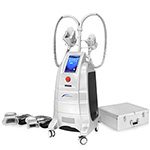
Cavitation ultrasound uses low-frequency ultrasound on localised areas, and cryolipolysis works through controlled cooling with applicators that attach to the treatment zone. Laserlipolysis completes the group using laser diodes mounted on pads.
What matters when comparing them is not only the machine but the applicators: their number determines how many zones can be treated at once, and their availability as spare parts determines how long the unit stays in service.
Facial treatment equipment
Facial protocols usually combine several devices in sequence, which is why the equipment is chosen as a set rather than one at a time.
Facial steamers open the treatment by softening the skin surface, and are the first step in most cleansing protocols. Skin peeling equipment follows, covering ultrasonic and microdermabrasion systems for exfoliation.
Mesotherapy devices handle the application phase, and light therapy units close the session with LED panels and masks in different wavelengths.
On mesotherapy units in particular, it is worth reading the manufacturer's operating conditions before choosing a model: on some virtual mesotherapy devices the circuit is completed through the operator holding the handpiece, which carries usage restrictions that the manufacturer sets out and that affect who can run the treatment.
A practical point when planning a facial cabin: these devices are used one after another on the same client, so bench space and the number of available sockets constrain the protocol as much as the machines themselves.
Pressotherapy and drainage
Pressotherapy works by pneumatic compression rather than by current or light: the unit inflates and deflates chambers inside a garment in a programmed sequence. It is the equipment used for drainage and circulation work.
Two figures define the unit: the number of outlets, which sets how many garments can be connected, and the number of compression modes, which determines the sequences available.
The garment is chosen separately and must match the unit: the number of chambers in the boot or sleeve has to correspond to the outlets on the machine. Boots, arm sleeves and abdominal belts are in pressotherapy accessories, and at domestic-use sizes it is worth checking length and circumference, which do not adjust indefinitely.
Manicure and pedicure stations
The nail station is a workspace rather than a single machine, and the two pieces are chosen together.
Pedicure chairs raise and recline the client so the technician reaches the foot without bending. The decisions here are hydraulic or electric actuation, and whether the model includes a hydromassage basin.
On models with a basin, how the water leaves the chair is the point to confirm before ordering: some units drain through a pump that requires connection to a waste outlet, while others are emptied manually. A chair specified with a drainage system will not drain on its own unless it is plumbed in, and that is a plumbing decision rather than a delivery one — so it is worth resolving with the manufacturer's data sheet before the chair arrives.
Manicure tables complete the station. What changes the working rhythm is not the amount of storage but how it is reached: whether the top drawer opens without lifting a hand from the surface, and whether polishes are displayed front-facing so the client can choose without pausing the session.
Power supply, plugs and installation
This is the check that most often gets left until the machine is already in the cabin, and it applies to every powered device in this section.
Professional beauty equipment is largely manufactured in continental Europe, so a unit may be supplied with a European (Schuko) plug rather than a UK three-pin BS 1363. Confirming the plug type supplied with each model — and arranging an adaptor or a fitted UK plug in advance — avoids a machine sitting unused on its first day.
Two related points belong in the same check. The power draw of each unit, because a facial cabin running a steamer, a light therapy panel and a peeling device from the same wall needs the sockets to support it. And, on machines with a water supply or drainage requirement, whether the installation is fixed or manual.
Where equipment is shipped from outside the UK, any applicable duties and import charges are set by customs and are separate from the product price, so it is worth confirming the total landed cost before ordering.
Delivery, assembly and what arrives built
Furniture items — trolleys, stations, tables and reception desks — usually arrive flat-packed, while most treatment machines arrive ready to use.
Two things are worth doing on delivery. Inspect the packaging before signing, because damage in transit on bulky items is easier to resolve when it is recorded at the point of delivery than afterwards. And check the fixings against the parts list before starting assembly, so a missing screw is identified at the beginning rather than halfway through.
Planning the equipment for a new clinic
For a clinic starting out, the practical order is to fix the treatment menu first and let it determine the machines, rather than the other way round.
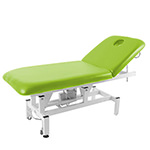
The base of any cabin is the treatment couch and the practitioner's stool, chosen so their height ranges overlap generously rather than merely meeting at the extremes. A note on stools: saddle stools are not simply a more compact chair. They open the hip angle and hold the pelvis closer to a standing posture, which suits some practitioners well and takes adjustment for others. If the working posture is new, a stool with a backrest is the safer first choice.
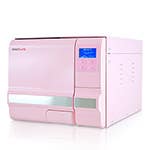
On top of that, a sterilisation route is required wherever instruments break the skin barrier or are reused between clients. Autoclave capacity is sized by what fits in each cycle rather than by weekly volume, so a sole practitioner and a three-chair salon need different units.
Only then do the treatment machines follow. Most clinics start with one versatile unit — usually radiofrequency, because it covers face and body — and add specialised equipment as the treatment menu grows.
What to check before buying any machine
Seven points apply across all the technologies in this section:
- Plug type supplied, and whether an adaptor or a fitted UK plug is needed
- Power draw, and whether several units will share a cabin and its sockets
- Water supply or drainage requirements, and whether they are fixed or manual
- Duty cycle and continuous operation, which determine whether the unit sustains back-to-back appointments
- Consumable cost per session — lamps, filters, applicator pads, garments — rather than the purchase price alone
- Availability of handpieces, applicators and garments as separate references, which determines the real service life
- Operator training requirements applicable to the device and to the treatments offered
Professional beauty equipment is intended for use by trained operators. Treatment protocols, client suitability and any precautions are determined by the practitioner in line with their training, the manufacturer's documentation and the requirements applicable to the activity.
Frequently asked questions
What basic equipment do I need to start a beauty clinic?
Start with the base of the cabin: a treatment couch and a practitioner's stool whose height ranges overlap, a trolley for organisation, a magnifying lamp for detailed work, and a sterilisation route for anything reused between clients. Treatment machines follow the treatment menu rather than the other way round, and most clinics begin with one versatile unit before adding specialised equipment.
Which machine should I buy first?
Radiofrequency is the most common first purchase because it covers both face and body with the same unit by changing the handpiece, which means one machine supports several items on the treatment menu. If hair removal is the core service, a light-based hair removal system anchors the menu instead, and its consumable cost should be worked out before comparing models.
Does the equipment come with a UK plug?
Professional beauty equipment is largely manufactured in continental Europe, so a unit may be supplied with a European Schuko plug rather than a UK three-pin BS 1363. It is worth confirming the plug type supplied with each model and arranging an adaptor or a fitted UK plug in advance, so the machine is usable from the first day. The same check applies to power draw when several units share a cabin.
How do I compare two machines that look similar?
By three figures rather than the headline rating: the duty cycle, which determines whether the unit runs back-to-back appointments; the consumable cost per session, covering lamps, filters, applicator pads or garments; and the availability of handpieces and applicators as separate references, because a machine whose applicator can no longer be sourced becomes unusable while the unit itself is intact.
Do pedicure chairs with a basin need plumbing?
It depends on the model. Some units drain through a pump that requires connection to a waste outlet, while others are emptied manually. A chair specified with a drainage system will not drain on its own unless it is plumbed in, so it is worth resolving against the manufacturer's data sheet before the chair arrives rather than after, because it is a plumbing decision and not a delivery one.
What is the difference between cavitation, radiofrequency and cryolipolysis?
They differ in the physical mechanism. Radiofrequency delivers energy that heats tissue at depth and covers both face and body by changing the handpiece. Cavitation uses low-frequency ultrasound on localised areas. Cryolipolysis works through controlled cooling with applicators that attach to the treatment zone. They are frequently combined within a protocol rather than used in isolation, and the choice of protocol is determined by the practitioner.
Is pressotherapy the same as electrostimulation?
No. Pressotherapy works by pneumatic compression, not by current: the unit inflates and deflates chambers inside a garment in a programmed sequence. What defines the unit is the number of outlets and the number of compression modes, and the garment must match the machine — the number of chambers has to correspond to the outlets.
Does furniture arrive assembled?
Furniture items such as trolleys, stations, tables and reception desks usually arrive flat-packed, while most treatment machines arrive ready to use. On delivery it is worth inspecting the packaging before signing, because damage in transit on bulky items is easier to resolve when recorded at that point, and checking the fixings against the parts list before starting assembly.
Does the equipment require certified operators?
Professional beauty equipment is intended for use by trained operators. The qualifications required depend on the device and on the treatments offered, and are set by the requirements applicable to the activity rather than by the supplier. Manufacturers provide user documentation with each device, and treatment protocols and client suitability are determined by the practitioner.